Key points
- Hygienic behaviour is the ability of workers to detect, uncap and remove diseased, dead or parasitised brood.
- VSH (Varroa Sensitive Hygiene) is a specialised form of it: workers remove the pupae in which varroa is reproducing.
- The freeze-killed brood test measures general hygiene, but does not on its own predict varroa resistance.
- Uncapping followed by recapping is more common in honey bee populations that survive varroa.
- No current line removes the need to count mites and treat when thresholds are exceeded.
VSH bees, short for Varroa Sensitive Hygiene, are bees whose workers locate the capped brood cells in which varroa is reproducing, open them and remove the pupa. This behaviour breaks the mite’s cycle at its most vulnerable point: its offspring, still immature, disappear along with the pupa. It is one of the most studied traits for breeding colonies that keep varroa better in check.
VSH belongs to a broader family, hygienic behaviour, known since the 1960s for its role against American foulbrood and chalkbrood. This factsheet explains what these two terms cover, what research has actually shown, how they are measured in the apiary and what you can expect from a “hygienic” or “VSH” queen. For the parasite’s biology and treatments, see the Varroa mites and varroosis factsheet.
Hygienic behaviour and VSH: what are we talking about?
Hygienic behaviour
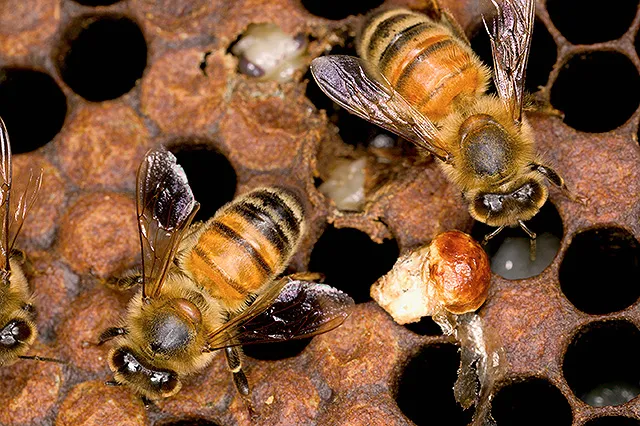
Hygienic behaviour is the ability of workers to detect diseased or dead capped brood, uncap the cell and remove its contents. The term was coined by Rothenbuhler in 1964, based on work on American foulbrood1. As early as the 1940s, resistant colonies had been observed removing diseased larvae before the bacterium reached the spore stage1. This trait is considered the main mechanism of resistance to American foulbrood and chalkbrood2.
The actions are the same whatever the cause: diseased brood, dead brood or parasitised brood1. What varies is how well workers perceive the problem through the capping, and how quickly they respond.
VSH, hygiene targeted at varroa
VSH refers to the same set of actions, but directed at cells infested by varroa. The term was proposed in 2007 by the USDA laboratory in Baton Rouge, in the United States1, 5. A bee can be highly hygienic towards brood killed by freezing yet not very effective against varroa, and vice versa: the two traits overlap without being the same1.
A discovery in two stages: from SMR to VSH
The SMR trait
In the late 1990s, American researchers selected colonies on one specific criterion: the proportion of varroa mites that manage to reproduce in worker brood3. They called this trait SMR, for Suppressed Mite Reproduction, because they believed the bees were preventing the mite from laying eggs. After about five generations of selection, their colonies had fewer than 6% reproducing mites in worker cells4.
The explanation: workers remove infested brood
In 2005, the same team placed frames of naturally infested brood in 9 SMR colonies and 8 control colonies. A week later, the share of infested cells was 2.2% in the SMR colonies compared with 9.0% in the controls, and the share of reproducing mites in the cells still infested was 20% compared with 71%4. The only plausible explanation was that the SMR workers had selectively removed the cells in which varroa was reproducing. The authors acknowledged that the name SMR was no longer appropriate4.
A USDA test illustrates the size of the difference: two halves of the same heavily infested comb were each given to 2,000 workers for 24 hours. The control bees removed 12 pupae and uncapped 19 more; the SMR bees removed 215 and uncapped 17812. The researchers believe the workers detect the smell of the mite’s offspring12.
When removal happens
In 2007, a 40-hour experiment showed that VSH colonies reduced the number of infested cells by 55%, compared with 13% in the controls. Removal mainly targeted pupae aged 1 to 5 days after capping: 66% fewer infested cells in this group, compared with 16% in the controls5. This is the period when varroa has just started laying. A visible consequence: in the brood of a VSH colony, the remaining mites are often females that have not laid any eggs5.
What hygiene changes for the colony
A brake on varroa growth
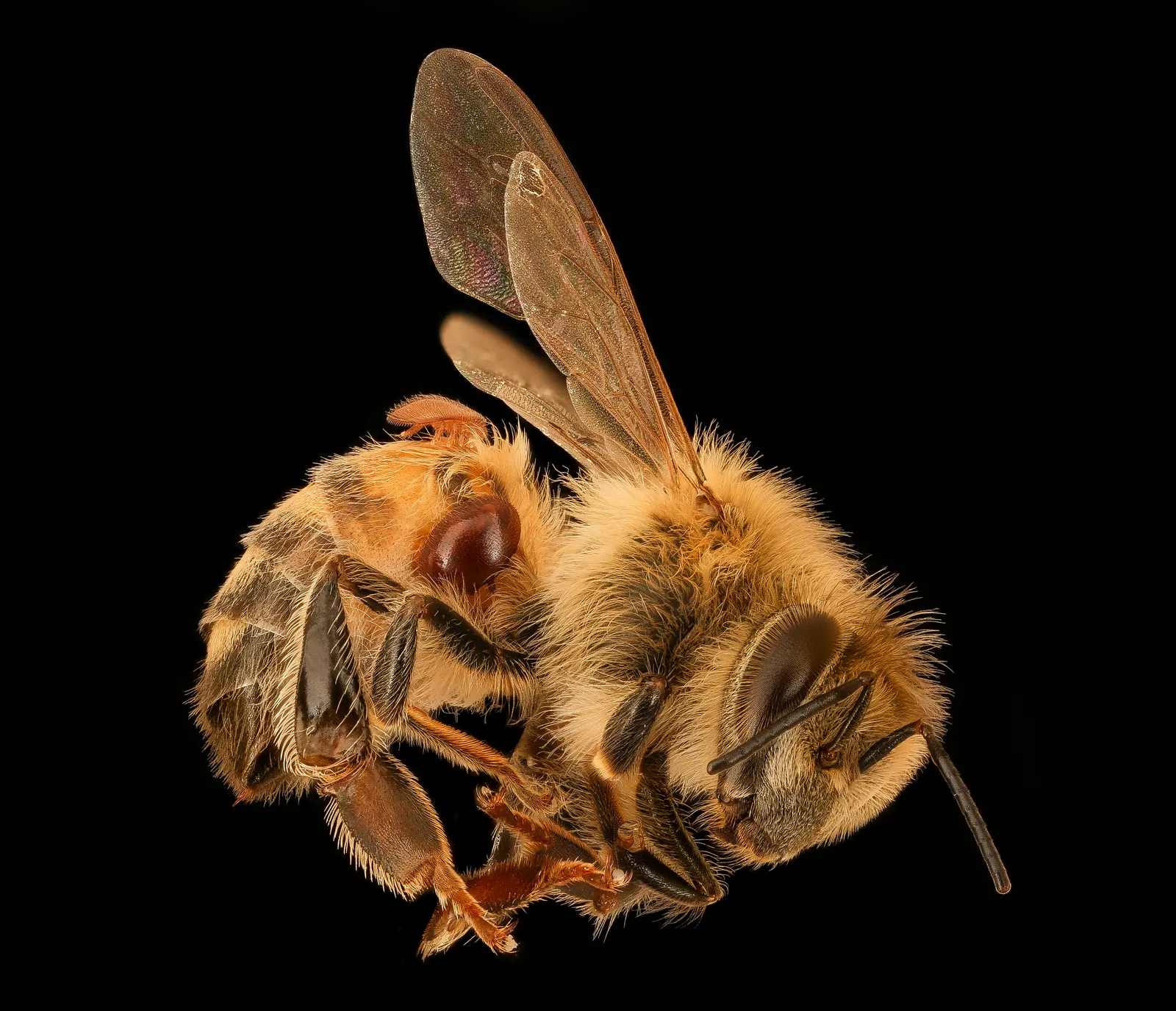
Varroa only multiplies in capped brood. Every infested pupa removed at the right time is a generation of young mites that never reaches maturity. A 2020 review confirms VSH as a major trait in reducing the growth of varroa populations, in both European and African honey bee populations9. The same review cites two other important mechanisms: grooming and recapping9.
Recapping, a promising indicator
Some workers open a cell, inspect the pupa and then close the capping again without removing it. A 2021 study compared populations that survive varroa (Avignon and Sarthe in France, Gotland in Sweden, a commercial population in Norway) with susceptible colonies from the same regions. Workers in the surviving populations recapped 35 to 55% of infested cells, compared with 22 to 31% in the susceptible colonies, and more frequent recapping went hand in hand with lower varroa reproduction7. The authors see it as a useful indicator for selection, even though its direct effect on the mite remains to be clarified.
A benefit against other diseases
A hygienic colony also removes larvae killed by chalkbrood or American foulbrood, often before spores form, which limits contamination1, 2. In 1994, chalkbrood mummies were observed only in the non-hygienic colonies of a comparative experiment2. On the other hand, patchy brood can also result from intense hygienic removal: see the Spotty brood factsheet.
What selection has shown, and its limits
General hygiene is not always enough
Lines selected using the freeze-killed brood test respond to varroa in variable ways. In a 1996 study, hygienic colonies removed 69.2% of infested pupae in 10 days compared with 10.0% for non-hygienic ones, but the following year, with a single mite per cell, the difference was no longer significant2. More recently, research has concluded that removal of freeze-killed brood does not predict varroa resistance traits in unselected populations1. Even for brood diseases, the test remains only an indicator: in a study of 649 colonies, 23% of highly hygienic colonies still had chalkbrood1.
VSH lines under commercial conditions
In the United States, VSH queens were crossed from 2008 to 2014 with the bees of three commercial operations, then selected for survival, population, honey production and low mite levels at the end of the season. Direct selection for VSH was considered too technical for commercial operations6. The resulting bees, known as “Pol-line”, had infestations similar to those of treated control colonies in 4 out of 4 comparisons, and removed about 80% of infested pupae in a test, like the original VSH line6.
Natural selection, at the cost of heavy losses
On the island of Gotland, in Sweden, 150 infested colonies were left untreated and free to swarm. Winter mortality reached 76% and then 57% in the third and fourth years, before falling back to 13% and 19% in the following two years8. A population survived, but at a level of losses no beekeeping operation could accept.
Why the problem is not solved
A 2020 review points out that thirty years of breeding programmes have not solved the varroa problem worldwide. The traits are hard to measure, their expression depends on the environment and the season, and queen mating is difficult to control10. Genetic markers are being studied, but no such tool is available on the market to date9.
Measuring hygiene in the apiary
| Method | What it measures | Difficulty |
|---|---|---|
| Freeze-killed brood test (liquid nitrogen, freezing, pin) | General hygiene | Simple; requires liquid nitrogen or a freezer |
| Proportion of non-reproducing mites | Combined effect of VSH and recapping | Uncap and examine about twenty infested cells per colony |
| Removal of introduced infested brood | VSH in the strict sense | Requires an infested frame and two counts |
| Recapping | Inspection of infested cells | Examine the inner side of the cappings |
| Infestation monitoring | Overall result | Regular counts, but influenced by reinfestation |
The freeze-killed brood test
A cylinder is pushed into capped brood, liquid nitrogen is poured into it, and the cleaned-out cells are counted after 24 hours. A colony is considered hygienic if it has cleaned out more than 95% of the cells within 24 hours, in two successive tests1, 11. A variant involves freezing a cut-out piece of comb before putting it back11.
Varroa-related measurements
- Non-reproducing mites. Open worker cells that have been capped for 8 to 11 days and contain a single mite; a mite is reproducing if it is accompanied by at least one daughter beyond the protonymph stage4.
- Removal test. Count the infested cells on a brood frame, place it in the colony being tested, then count again after a set period; the decrease measures VSH5.
- Recapping. Turn the cappings over: an area with no cocoon silk reveals a cell that has been reopened and then closed again7.
These measurements, which are time-consuming and demanding, are mainly a matter for queen rearing.
Regulation
In France, breeding hygienic or VSH bees is not covered by any specific regulation. It does not change the obligations relating to varroa: only medicines with a marketing authorisation for honey bees are permitted, and every treatment is recorded in the apiary medicine/treatment register. Buying queens or colonies, in France as in the European Union, is subject to the general animal health rules, including the health certificate for trade between Member States: see the Apiary biosecurity factsheet. Rules differ between countries: check the ones that apply where you keep bees.
Using selection in varroa control
- Treat genetics as one tool among others, alongside counts, authorised treatments and non-medicinal methods.
- Breed from your best colonies, assessed on several criteria, not just on surviving one year.
- Keep infestation under control, even with selected queens: a well-managed late-summer treatment protects the winter bees.
- Limit loss of the trait: a daughter queen mated with local drones passes on only part of her mother’s hygiene.
In practice: what beekeepers actually do
Most beekeepers who rely on hygienic bees do not give up treatments: they combine selection, simple tests and infestation monitoring.
Practical habits
- Run a freeze-killed brood test on colonies you are considering for breeding, ideally twice in the season.
- Note the colonies that stay lightly infested from one year to the next, under the same management.
- Look closely at brood frames: uncapped cells, removed pupae, reopened cappings.
- Exclude from breeding colonies badly affected by chalkbrood or heavily infested in late summer.
Common strategies
- Buy queens from breeding programmes, asking the seller which traits are measured and how.
- Rear your own queens from your best colonies, if possible flooding the mating area with drones from selected colonies.
- Join a collective breeding programme, which shares tests and data across a large number of colonies.
Useful kit
- Cylinder and liquid nitrogen, or a freezer for the cut-comb variant.
- Fine tweezers, a magnifying glass and a lamp to examine cells.
- A notebook or spreadsheet per colony: queen origin, tests, counts, treatments.
Checklist before introducing a selected queen
- Check the queen’s origin and the traits measured by the seller.
- Check the health documents if buying from outside France.
- Introduce the queen into a colony whose infestation level is known.
- Keep counting mites as you would for any other colony.
- Assess the colony over at least one full season before drawing conclusions.
The most common mistakes
- Stopping counts because a queen is sold as “VSH” or “hygienic”.
- Judging a colony on a single test, when hygiene varies with the season and the nectar flow.
- Confusing general hygiene with varroa resistance: a good freeze-killed brood score does not guarantee a low mite level.
- Crediting genetics for a low infestation that actually comes from a brood break or swarming.
- Neglecting mating: without control over the drones, the trait is diluted within one or two generations.
Frequently asked questions
What is a VSH bee? It is a bee whose workers detect the capped brood cells in which varroa is reproducing, open them and remove the pupa. The mite’s offspring are eliminated before reaching adulthood.
Does a VSH queen mean I no longer need to treat for varroa? No. No current line guarantees this under normal beekeeping conditions. Colonies headed by selected queens should be monitored by counting and treated when thresholds are exceeded.
How do I test a colony’s hygienic behaviour? The most common test is to kill an area of capped brood with liquid nitrogen or by freezing, then count the cleaned-out cells after 24 hours. More than 95% of cells cleaned out in two successive tests indicates a hygienic colony.
What is the difference between hygienic behaviour and VSH? Hygienic behaviour refers to the removal of diseased or dead brood in general. VSH is the targeted removal of brood infested by varroa. A colony can be good at one and average at the other.
Are hygienic bees also resistant to brood diseases? Hygienic behaviour is the main known mechanism of resistance to chalkbrood and American foulbrood. It reduces the risk without eliminating it.
References
- Spivak M., Danka R.G. (2021). Perspectives on hygienic behavior in Apis mellifera and other social insects. Apidologie 52(1): 1-16. doi.org
- Spivak M. (1996). Honey bee hygienic behavior and defense against Varroa jacobsoni. Apidologie 27(4). apidologie.org
- Harbo J.R., Harris J.W. (1999). Selecting honey bees for resistance to Varroa jacobsoni. Apidologie 30(2-3). doi.org
- Harbo J.R., Harris J.W. (2005). Suppressed mite reproduction explained by the behaviour of adult bees. Journal of Apicultural Research 44(1): 21-23. ars.usda.gov
- Harris J.W. (2007). Bees with Varroa Sensitive Hygiene preferentially remove mite infested pupae aged ≤ five days post capping. Journal of Apicultural Research 46(3): 134-139. ars.usda.gov
- Danka R.G., Harris J.W., Dodds G.E. (2016). Selection of VSH-derived "Pol-line" honey bees and evaluation of their Varroa-resistance characteristics. Apidologie 47(3): 483-490. doi.org
- Oddie M.A.Y., Burke A., Dahle B., Le Conte Y., Mondet F., Locke B. (2021). Reproductive success of the parasitic mite (Varroa destructor) is lower in honeybee colonies that target infested cells with recapping. Scientific Reports 11: 9133. doi.org
- Fries I., Imdorf A., Rosenkranz P. (2006). Survival of mite infested (Varroa destructor) honey bee (Apis mellifera) colonies in a Nordic climate. Apidologie 37(5): 564-570. doi.org
- Noël A., Le Conte Y., Mondet F. (2020). Varroa destructor: how does it harm Apis mellifera honey bees and what can be done about it? Emerging Topics in Life Sciences 4(1): 45-57. doi.org
- Guichard M., Dietemann V., Neuditschko M., Dainat B. (2020). Advances and perspectives in selecting resistance traits against the parasitic mite Varroa destructor in honey bees. Genetics Selection Evolution 52: 71. doi.org
- SARE (Sustainable Agriculture Research and Education). Testing honey bee colonies for hygienic behavior (liquid nitrogen freeze-killed brood method). sare.org
- USDA ARS (2005). Cleaning house, and hive. Agricultural Research, October 2005. agresearchmag.ars.usda.gov
- USDA ARS, photo library. Workers removing chalkbrood mummies, photo D007-1 (Stephen Ausmus, public domain). ars.usda.gov
- USGS Bee Inventory and Monitoring Lab. Apis mellifera and Verroa (photograph, public domain). usgs.gov