Key points
- Varroa has already developed resistance to tau-fluvalinate, to coumaphos and, more recently, to amitraz.
- A treatment that leaves many mites behind is not necessarily a case of resistance: reinfestation, poor strip placement and brood are more common causes.
- The only field evidence is a count before and after treatment, followed by a control treatment.
- No resistance to oxalic acid has been established to date, which makes it a cornerstone of rotation strategies.
- In France, lack of efficacy of a medicine is reported through the pharmacovigilance system on the Anses website.
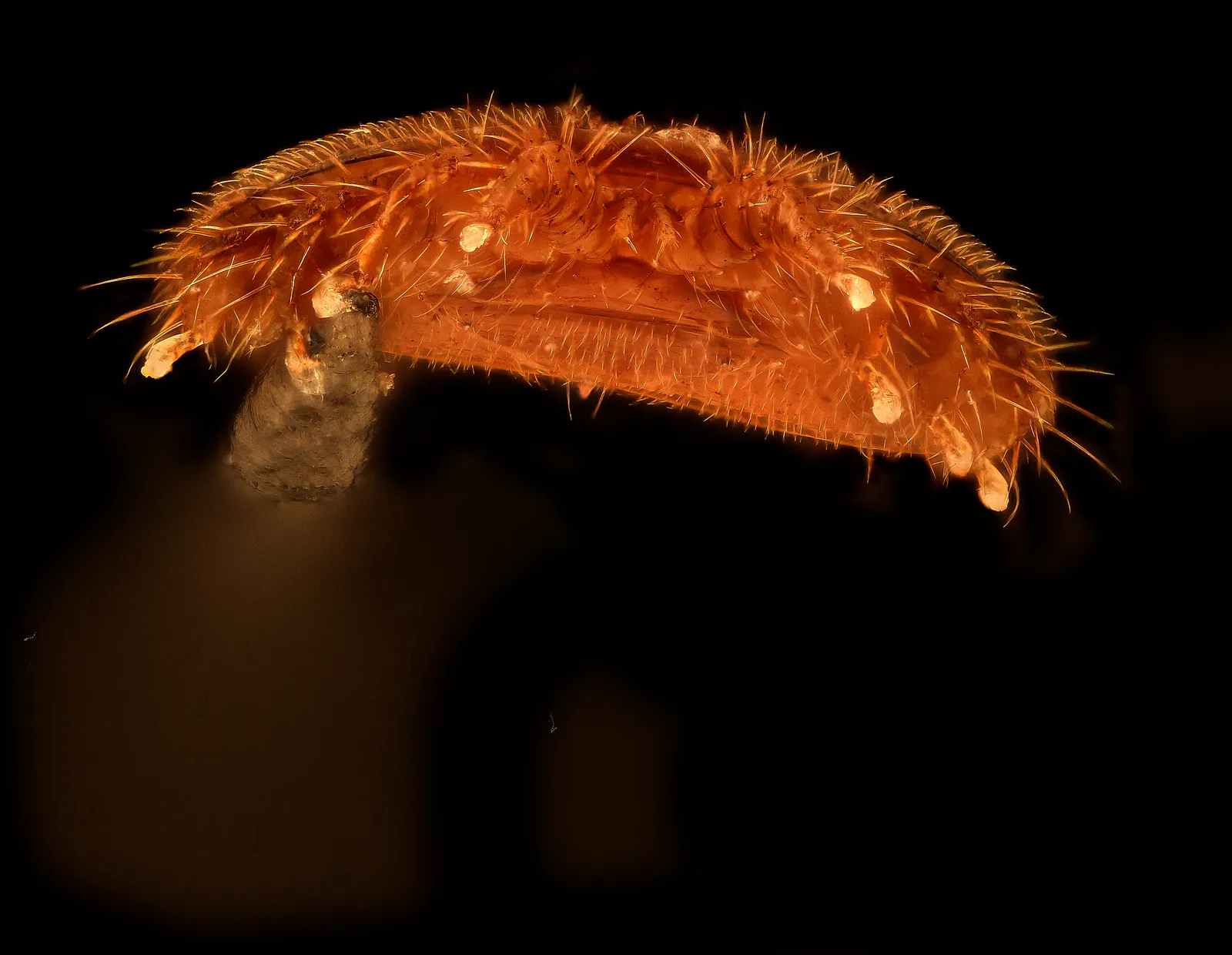
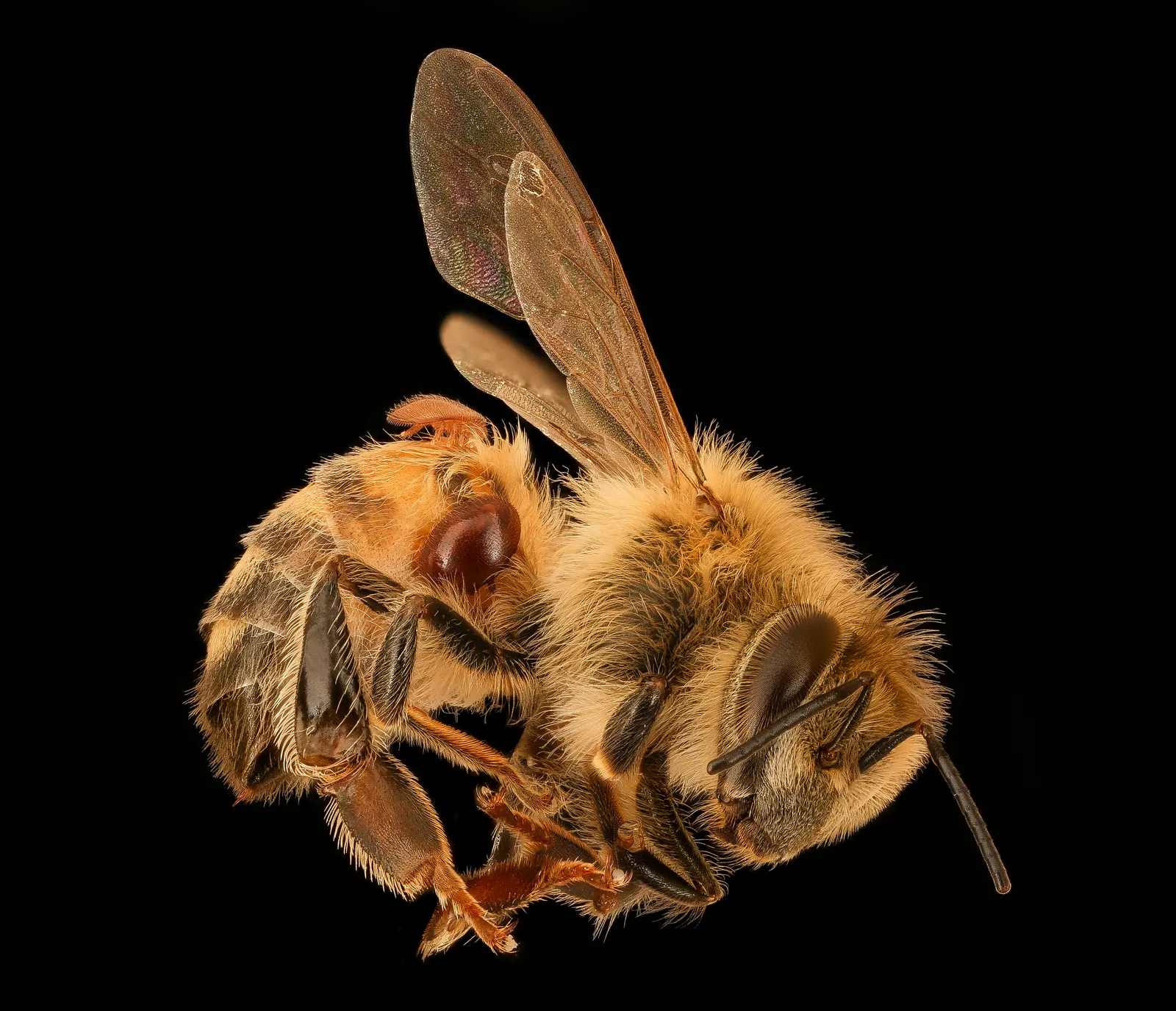
Varroa acaricide resistance is the reason a treatment that worked yesterday can fail today. Varroa destructor breeds fast and in large numbers, and every treatment kills the susceptible mites while leaving behind those that best tolerate the substance. Repeated year after year with the same molecule, this selection eventually produces populations on which the medicine has almost no effect.
The phenomenon has been documented for pyrethroids, for coumaphos and, in recent years, for amitraz, the substance most widely used in France in late summer. This factsheet explains how resistance arises, how to tell it apart from a simple treatment failure, how to measure efficacy in the apiary and how to preserve the medicines that still work. For the parasite’s biology and the treatment calendar, see the Varroa mites and varroosis factsheet.
How resistance arises
Selection by treatment
In any varroa population, a few individuals happen to carry a genetic variation that makes them less susceptible to a substance. As soon as that substance is used, they survive better than the others and pass the trait on to their daughters. Varroa goes through several generations per season and partly reproduces through brother-sister mating inside the cell: a favourable trait can therefore become established quickly in a colony.
Several practices speed up this selection: always using the same family of substances, leaving a strip in place beyond the intended duration, or resorting to unauthorised preparations. Acaricide residues that build up in beeswax also prolong the mites’ exposure to low concentrations: see the Pesticide and miticide residues in beeswax factsheet.
Two main mechanisms
- Target-site resistance. A mutation alters the protein the substance acts on, so the substance binds to it less well. This is the best-described mechanism in varroa.
- Metabolic resistance. The mite breaks down the substance faster thanks to more active detoxification enzymes. It is harder to demonstrate.
Known resistance, substance by substance
Tau-fluvalinate (pyrethroid)
This was the first resistance to be described. In Lombardy, after heavy colony losses in autumn 1992, a trial carried out in 1993 in 8 apiaries showed that Apistan’s efficacy varied widely from one apiary to another, from 4% to 89.5%, with an average of only 44.5%1. The authors interpreted this as different levels of resistance to fluvalinate. Similar cases were then reported across much of Europe and in North America10.
The mechanism is now well understood: mutations in the sodium channel, the target of pyrethroids, at an amino acid called L925. In the United Kingdom, the L925V mutation was found in all mites that had survived a tau-fluvalinate treatment3. In the southeastern United States, other mutations at the same position (L925I and L925M) were detected in 98% of surviving mites4. An important point in practice: these mutations persist in populations even in the absence of treatment. In the British study, the resistant allele was still present, at a frequency below 10%, in mites from untreated hives3.
Coumaphos (organophosphate)
In the United States, a migratory beekeeper from Maine reported in autumn 2001 that two coumaphos treatments applied according to the label had failed. Jar tests gave an average mite mortality of only 13% in his colonies, compared with 89 to 98% in reference colonies from Maryland2. At the time, coumaphos was being used as a replacement for fluvalinate, which had become ineffective.
Amitraz (formamidine)
Amitraz long remained effective despite intensive use. In a 2020 American study of commercial operations in Louisiana, New York and South Dakota, the measured efficacy of Apivar fell to 68% in one apiary, with large differences from one colony to the next5. According to the author, amitraz was still effective in many operations, but resistance ranged from none to high depending on the apiary.
In France, an inventory carried out in 2018 and 2019 using laboratory tests concluded that 71% of mite samples showed resistance to amitraz and 57% to tau-fluvalinate, based on the thresholds chosen by the authors6. Researchers then linked a mutation in the octopamine receptor (N87S) to treatment failures in French apiaries, and another mutation (Y215H) to failures in the United States7. They themselves describe this link as presumptive, still to be confirmed by functional studies. In the northwestern United States, an extension factsheet published in 2026 reports that the average share of amitraz-resistant mites in monitored colonies rose from under 20% to nearly 50% between 2019 and 20259.
Organic acids and thymol
A systematic review published in 2024, which gathered 274 oxalic acid efficacy values from 73 sources between 1994 and 2022, found no evidence of resistance developing. Low results are better explained by the presence of brood or by trial conditions8. The authors nonetheless stress that data remain limited. For formic acid and thymol, no resistance has been established in the field to date; their efficacy depends mainly on temperature. These substances are therefore valuable in a rotation strategy.
| Family | Substance | Documented resistance | Main known mechanism |
|---|---|---|---|
| Pyrethroids | Tau-fluvalinate | Yes, long-standing and widespread1, 3 | Sodium channel mutations (L925) |
| Organophosphates | Coumaphos | Yes, in the United States2 | Not covered here |
| Formamidines | Amitraz | Yes, increasing5, 6 | Suspected octopamine receptor mutations |
| Organic acids | Oxalic acid | Not established8 | Not applicable |
| Organic acids, essential oils | Formic acid, thymol | Not established to date | Not applicable |
Impact on the colony
Resistance itself cannot be seen, only its consequences: the late-summer treatment leaves too many mites, which parasitise the brood of the winter bees. Deformed wing virus multiplies, winter bees live shorter lives, and the colony dwindles in autumn or early winter, often with untouched stores. Many winter losses actually come from an ineffective treatment: see the Winter losses: why did my hive die? factsheet.
At apiary level, the effect is cumulative: poorly protected colonies collapse, get robbed, and their resistant mites move into neighbouring colonies.
Recognising a treatment failure
Warning signs:
- counts still high a few weeks after the end of treatment;
- a low mite drop on the sticky board during treatment, although the colony was infested;
- bees with deformed wings in September-October;
- colonies dwindling in autumn despite a treatment applied on time.
Not to be confused with resistance
Before concluding that resistance is to blame, rule out the most common causes of failure.
| Possible cause | Clues | What sets it apart from resistance |
|---|---|---|
| Reinfestation | Counts rising quickly after a good treatment; collapsed or untreated colonies nearby | Mite drop during treatment was high; the infestation is coming back from outside |
| Treatment too late | Treatment in September-October | Winter bees were already parasitised before treatment |
| Poor application | Strips badly placed, far from the brood, or not moved as the label requires | Failure affects a few colonies, not the whole apiary |
| Unfavourable conditions | Thymol or formic acid in weather that is too cool or too hot; oxalic acid with capped brood present | Efficacy varies with the weather and the presence of brood |
| Resistance | Repeated failure with the same substance, despite correct application and no obvious reinfestation | A control treatment from another family brings down many mites |
Reinfestation is the most common trap at the end of the season: see the Honey bee robbing: recognise, prevent and stop it factsheet.
Measuring treatment efficacy
The reference method in the apiary
The only reliable way to judge a treatment is to count the mites it kills, then those that remain. This is the method used in the 1993 Lombardy trial: mite drop counted throughout the treatment, then a control treatment with another medicine and a count of the additional drop1.
- Before treatment, measure infestation with an alcohol wash or sugar roll (mites per 100 bees) on a few representative colonies.
- During treatment, slide a sticky board under the mesh floor and count the mite drop regularly.
- At the end of treatment, apply a control treatment from another family, authorised and used according to its label. Oxalic acid, when there is no brood, is often chosen for this.
- Count the drop caused by this control treatment.
- Calculate efficacy: mites dropped during the tested treatment, divided by the total number of mites dropped (tested treatment plus control treatment), multiplied by 100.
Efficacy clearly below what is expected, across several correctly treated colonies, should raise suspicion of resistance. Failing that, a wash a few weeks after treatment already gives an indication.
Jar tests
Quick tests estimate the mites’ susceptibility: about 150 to 300 bees are placed in a container with a small piece of strip, then the mites that have dropped and those still on the bees are counted. Exposure time depends on the substance: 6 hours in the original coumaphos test, 3 hours in recent amitraz protocols2, 5, 9. They require a sufficient infestation and are mainly used for monitoring and research; they do not replace counting before and after treatment.
Laboratory testing
Research laboratories carry out susceptibility tests on live mites and genetic analyses for known mutations6, 7. These are monitoring tools, not routine tests.
Regulation
In France, only veterinary medicines with a marketing authorisation for honey bees may be used against varroa. Every treatment is recorded in the apiary’s treatment register, with the name of the medicine and the batch number12.
Lack of efficacy of a veterinary medicine falls under pharmacovigilance and can be reported online on the website of Anses (French Agency for Food, Environmental and Occupational Health & Safety). Between 2013 and 2018, 91% of the 162 reports concerning beekeeping medicines related to lack of efficacy. A useful report includes figures: counts before and after treatment, colony condition, batch numbers. Beekeepers can go through a local animal health association, a veterinarian, a beekeeping health technician or a beekeeping development association11. Authorised medicines, their conditions of use and reporting channels differ between countries: check the rules that apply where you keep bees.
Preventing resistance
- Rotate substance families, not just brands: two medicines from the same family exert the same selection pressure.
- Respect the treatment duration and strip position stated on the label.
- Include oxalic acid when there is no brood and non-chemical methods (drone brood trapping, brood breaks), which reduce the number of treatments.
- Treat the whole apiary at the same time, and coordinate with neighbours where possible.
- Replace combs regularly to limit the build-up of residues.
In practice: what beekeepers actually do
Faced with resistance, beekeepers who winter their colonies successfully do not look for a miracle product: they measure, rotate and write everything down.
Practical habits
- Count before and after every treatment, on a few sentinel colonies per apiary.
- Put in a sticky board during treatment on at least one colony per apiary, to follow the mite drop.
- Record medicine batch numbers in the treatment register: this is essential for a pharmacovigilance report.
- Compare results from one year to the next: a gradual drop in efficacy is the first sign of resistance.
Common strategies
- Yearly rotation: one year with a late-summer amitraz treatment, the next year with an organic acid or thymol treatment, and every winter an oxalic acid treatment while colonies are broodless.
- Queen caging followed by oxalic acid in summer, which reduces reliance on long-acting strips.
- The broodless winter treatment, which also serves as a check on the summer treatment.
Useful kit
- A jar with a mesh lid and a sieve for counts; greased sticky boards.
- A notebook or spreadsheet per apiary: date, colony, counts, medicine, batch.
Checklist when failure is suspected
- Check the date, duration and placement of the treatment.
- Look for a source of reinfestation (collapsed colonies, neighbouring apiaries).
- Apply a control treatment from another family and count the drop.
- If efficacy is low across several correctly treated colonies, talk to your animal health organisation or veterinarian, and file a pharmacovigilance report.
- Switch substance family the following season.
The most common mistakes
- Concluding that mites are resistant without counting before and after treatment.
- Changing brand without changing substance, which makes no difference to the mite.
- Leaving strips in all winter, which exposes mites to too low a dose.
- Repeating the same treatment after a failure.
- Overlooking reinfestation, which is common in autumn.
- Using home-made preparations, which are illegal and a source of resistance.
Frequently asked questions
How can I tell whether the varroa mites in my apiary are resistant to amitraz? By counting mites before and after treatment, then applying a control treatment from another family. If many mites drop during the control treatment across several correctly treated colonies, amitraz was not very effective.
Can varroa become resistant to oxalic acid? No resistance has been established to date: a 2024 systematic review found no drop in efficacy linked to resistance. The failures observed are mainly explained by capped brood being present at the time of treatment.
Does a substance that has stopped working become effective again over time? Not reliably: resistance mutations to tau-fluvalinate persist even without treatment. Any return to an abandoned substance should be checked by counting.
What should I do if a varroa treatment has not worked? First check how it was applied and look for reinfestation, then carry out a control treatment from another family and count the drop. If the failure is confirmed, talk to your veterinarian or animal health organisation and report the lack of efficacy on the Anses website.
References
- Lodesani M., Colombo M., Spreafico M. (1995). Ineffectiveness of Apistan® treatment against the mite Varroa jacobsoni Oud in several districts of Lombardy (Italy). Apidologie 26(1): 67-72. doi.org
- Pettis J.S. (2004). A scientific note on Varroa destructor resistance to coumaphos in the United States. Apidologie 35(1): 91-92. doi.org
- González-Cabrera J., Davies T.G.E., Field L.M., Kennedy P.J., Williamson M.S. (2013). An amino acid substitution (L925V) associated with resistance to pyrethroids in Varroa destructor. PLoS ONE 8(12): e82941. doi.org
- González-Cabrera J., Rodríguez-Vargas S., Davies T.G.E., Field L.M., Schmehl D., Ellis J.D., Krieger K., Williamson M.S. (2016). Novel mutations in the voltage-gated sodium channel of pyrethroid-resistant Varroa destructor populations from the Southeastern USA. PLoS ONE 11(5): e0155332. doi.org
- Rinkevich F.D. (2020). Detection of amitraz resistance and reduced treatment efficacy in the Varroa mite, Varroa destructor, within commercial beekeeping operations. PLoS ONE 15(1): e0227264. doi.org
- Almecija G., Poirot B., Cochard P. et al. (2020). Inventory of Varroa destructor susceptibility to amitraz and tau-fluvalinate in France. Experimental and Applied Acarology 82: 1-16. doi.org
- Hernández-Rodríguez C.S., Moreno-Martí S., Almecija G. et al. (2022). Resistance to amitraz in the parasitic honey bee mite Varroa destructor is associated with mutations in the β-adrenergic-like octopamine receptor. Journal of Pest Science 95(3): 1179-1195. doi.org
- Kosch Y., Mülling C., Emmerich I.U. (2024). Resistance of Varroa destructor against oxalic acid treatment: a systematic review. Veterinary Sciences 11(9): 393. doi.org
- Martin A., Price B., Rinkevich F., Chakrabarti P., Hopkins B. (2026). Emergence of amitraz-resistant Varroa: what beekeepers should know and how to respond. Washington State University Extension, FS411E. pubs.extension.wsu.edu
- Rosenkranz P., Aumeier P., Ziegelmann B. (2010). Biology and control of Varroa destructor. Journal of Invertebrate Pathology 103: S96-S119. doi.org
- Vallon J. (2023). À quoi sert la pharmacovigilance ? Réussir Apiculture (in French). reussir.fr
- DRAAF Occitanie (2022). Rappels sur l'usage des médicaments vétérinaires en apiculture (in French). draaf.occitanie.agriculture.gouv.fr
- USGS Bee Inventory and Monitoring Lab. Varroa destructor4 (photograph, public domain). usgs.gov
- USGS Bee Inventory and Monitoring Lab. Apis mellifera and Verroa (photograph, public domain). usgs.gov