Key points
- Lake Sinai virus (LSV), discovered in 2011 in the United States, is one of the most common and most abundant viruses in honey bees.
- It causes no recognisable symptoms: only a PCR test can detect it.
- Several studies find more LSV in colonies that are weak or die over winter, without proving that it is the cause.
- Other recently described viruses (Macula-like virus, AmFV, Moku virus) are also circulating, with an impact that is still poorly understood.
- No treatment: control varroa, keep colonies strong and well fed, and take care when exchanging bees.
Lake Sinai virus (LSV) is one of the most common viruses in the honey bee, and yet one of the least known to beekeepers. Discovered in 2011 in the United States, it has since been found on several continents, often in large quantities. It causes no characteristic symptoms: you cannot see it, and it can only be detected by a laboratory test.
LSV is the best example of the “emerging viruses” of the honey bee, brought to light over the past fifteen years by high-throughput sequencing, which reads all the genetic material in a sample in one go. Their role in colony health often remains uncertain. This page reviews what is known about LSV and the other recently described viruses, and what this means in the apiary.
Lake Sinai virus: discovery and biology
A discovery made by sequencing
LSV was described in 2011 by a team from the University of California, San Francisco. Over about ten months, from April 2009 to January 2010, the researchers followed twenty colonies belonging to a large US migratory beekeeping operation that moved between Mississippi, South Dakota and California1. By analysing the bees through sequencing, they identified four new viruses, two of which they named Lake Sinai virus 1 and 2 (LSV1 and LSV2)1. The name comes from Lake Sinai, in South Dakota, near which some of the operation’s apiaries were located2.
A small RNA virus
LSV is a single-stranded RNA virus whose genome is carried on a single molecule of about 5.5 to 6 kilobases1, 8. Its particles are spherical (icosahedral), with a diameter of around 28 nanometres2. Its polymerase, the enzyme that copies its genome, resembles that of chronic bee paralysis virus (CBPV), with about 25% identical amino acids; but CBPV has a genome in two segments, whereas that of LSV is in one piece1. The researchers detected in bees the “negative” form of its RNA, which only appears when the virus is replicating: the bee is therefore a true host, not merely a carrier1, 2.
In 2020, the International Committee on Taxonomy of Viruses (ICTV) created a family of its own for these viruses, the Sinhaliviridae8.
A highly variable family of viruses
There is not just one LSV, but a set of quite different lineages. The first two, LSV1 and LSV2, share only about 71% of their sequence1. A 2015 US study detected six lineages in the country2. In the Czech Republic, at least three distinct genetic groups are circulating, and the most common may even constitute a new species6. In South Korea, the strains found are close to those from China and Japan, and clearly distinct from US and Belgian strains5.
Where the virus is found
In the bee
LSV is concentrated in the gut. In 22 bees analysed organ by organ, the quantity of LSV2 was highest in the gut, followed by the abdomen, the thorax and finally the head; in the most heavily infected bees, the gut contained around 30,000 times more than the head2. This suggests transmission through food or faeces, although the exact routes have not been established2.
Considerable quantities
In the 2011 study, LSV2 was the most abundant virus of all, with in the order of 1011 copies of its genome per bee at its peaks1. Unusually, these peaks occurred in April and January, whereas LSV1, like most honey bee viruses, peaked in July1.
In varroa and other insects
LSV has been found in varroa: in a series of 68 mites, about 13 to 15% carried LSV1 or LSV22. But there is no evidence to date that the virus replicates in the mite, or that varroa acts as a vector for it in the way it does for deformed wing virus2. LSV has also been detected in wild bees, including the horned mason bee, in bumblebees, in ants and in pollen2, 5.
A worldwide distribution
LSV has been reported in countries including Spain, Belgium, Germany, Slovenia, Turkey, Australia, China, Japan and South Korea5, as well as the Czech Republic6. Since it is not routinely tested for, it is probably present in many other countries.
Impact on the colony: what the studies say
LSV is very often present in healthy colonies. Several studies nevertheless suggest that it weighs on colonies that are already weakened.
More virus in weak colonies
- Colony collapse in the United States. In 2012, a study of colonies affected by colony collapse disorder (CCD) showed that these colonies carried more pathogens, in greater quantities, than control colonies. New strains of LSV were identified in them3, with higher loads than in healthy colonies2.
- One-year monitoring in Montana. Fifty colonies from a single operation were followed from November 2015 to October 2016, including a stint pollinating almonds in California. Twenty-two died. The most populous colonies harboured less LSV2 than weak colonies. The authors see this as a possible negative effect of LSV2, while stressing that the link needs to be confirmed4.
- Winter losses in South Korea. Of 266 colonies tested in 2022, 60.9% carried LSV2. In apiaries that had suffered heavy winter losses, LSV2 was present in 65.2% of colonies, against 42.3% in apiaries with normal losses; the difference was even clearer for another lineage, LSV35.
But no proof of causation
These studies show an association, not a cause: a colony already weakened by varroa, starvation or another disease may simply allow the virus to multiply. During the heavy colony losses seen in the United States between 2024 and early 2025, LSV was detected in about 64% of the 113 colonies tested; but it was mainly deformed wing virus and acute bee paralysis virus that were implicated, against a background of varroa mites carrying a marker of amitraz resistance7. The Korean authors likewise note that the pathogenicity of LSV and its symptoms remain poorly defined, and that it may vary from one lineage to another5.
In practice, LSV is currently regarded as a possible aggravating factor in winter losses, not as a disease in its own right.
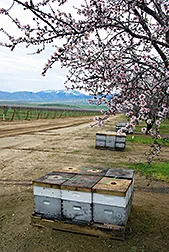
Other emerging honey bee viruses
LSV is not an isolated case. A 2020 international review points out that a growing number of viruses are being described in the honey bee, but that four remain by far the most widespread: deformed wing virus, sacbrood virus, black queen cell virus and the acute bee paralysis complex. The same review stresses that the global trade in bees and hive products spreads these viruses, and that many also infect other pollinators12.
| Virus | Type | What is known |
|---|---|---|
| Lake Sinai virus (LSV) | RNA, Sinhaliviridae | Very common and abundant; more prevalent in weak colonies4, 5 |
| Bee Macula-like virus (BeeMLV) | RNA, close to the Tymoviridae | Very common in French apiaries; mainly in varroa mites, peaking in autumn9 |
| Apis mellifera filamentous virus (AmFV) | Large DNA virus | Genome of about 500,000 bases; detected in 72.2% of Czech samples6, 10 |
| Moku virus | RNA, iflavirus | Discovered in a wasp in Hawaii, also found in honey bees and varroa11 |
Bee Macula-like virus (BeeMLV)
This RNA virus of about 6,500 bases resembles plant viruses of the family Tymoviridae. It has proved very common in French apiaries, as in Belgium, but was not detected in large surveys in Sweden and Norway. It is most frequent in varroa mites, with an autumn peak that follows the growth of mite populations. The honey bee is a confirmed host; varroa is probably a vector9. Its effect on the colony has not been established.
The filamentous virus (AmFV)
This large double-stranded DNA virus may represent a new family10. In the Czech Republic, it was the most frequently detected virus, ahead of deformed wing virus6.
Moku virus
First found in a social wasp, Vespula pensylvanica, in Hawaii, then in honey bees and varroa mites from the same site, it is related to slow bee paralysis virus (SBPV), which is highly virulent in honey bees11.
Recognising LSV: no specific symptoms
No sign in the apiary points to LSV: a carrier colony can look normal. When the virus is abundant, you will at most see what goes with any weakened colony: a smaller population, slow build-up in spring, higher winter losses. Before thinking of an emerging virus, look for the common causes: varroa infestation, starvation, queen problems, nosema.
| What you see | Causes to look for first | Where to find out more |
|---|---|---|
| Weak colony, bees with deformed wings | Varroa and deformed wing virus | Deformed wing virus |
| Trembling, black, shiny bees | Chronic bee paralysis | Chronic bee paralysis |
| Weak colony with no particular sign | Varroa, nutrition, queen, nosema; emerging viruses only after that | Laboratory testing |
Diagnosis
In the apiary
- Measure the varroa infestation, by alcohol wash or sugar roll: it is the first cause of weakening to rule out.
- Assess the colony: number of frames covered, brood, stores, presence of the queen.
- Note any symptoms (deformed wings, trembling, diarrhoea) to guide the testing.
In the laboratory
Only RT-PCR, which detects the virus’s RNA, can identify LSV; the quantitative version also measures the viral load2, 4. You need to ask for it explicitly, as it is not always among the tests offered. Because of the diversity of lineages, the result also depends on the primers used6.
Since LSV is so widespread, its mere presence says nothing; it is a very high load in a weak colony, with no other obvious cause, that may point to a role for the virus.
Regulation
In France, Lake Sinai virus is not a notifiable disease, and neither are the other viruses presented here. None of them is on the World Organisation for Animal Health (WOAH) list of bee diseases13. Rules vary between countries. A suspected case of American foulbrood, on the other hand, must always be reported.
Prevention and what to do
There is no medicine against LSV, or against any honey bee virus. Prevention relies on the overall health of colonies.
- Control varroa. Even though its role in transmitting LSV has not been demonstrated, it weakens colonies and transmits other viruses7, 12.
- Keep colonies strong. Populous colonies harbour less LSV2 than weak ones4. Uniting colonies that are too weak before winter is a standard measure.
- Make sure colonies are fed, with feeding during a dearth.
- Take care when exchanging colonies, queens and swarms, as trade spreads viruses12. See Apiary biosecurity.
- Prevent robbing of weak or dead colonies, which spreads pathogens.
In practice: what beekeepers actually do
Lake Sinai virus cannot be seen: most beekeepers do not manage it as such, but through the general management of their apiary. Here are the most widespread habits for dealing with viruses that cause no symptoms.
Practical steps
- Count varroa mites regularly, before and after each treatment, rather than treating blindly.
- Record colony strength at each inspection to spot those that are falling behind.
- Close up and remove a dead colony quickly, to prevent robbing.
Common strategies
1. Deal with the known causes first. Faced with a weak colony, most beekeepers check varroa, stores and the queen before considering a virus test.
2. Unite rather than overwinter weak colonies. A colony that is too small in autumn is usually united with another, stronger one.
3. Ask for a targeted test in the event of repeated, unexplained losses.
Equipment to have
- A wash jar or a sugar-roll device for counting varroa mites.
- An apiary record book or an app to track colony strength.
- Clean tubes or bags and labels for samples.
Checklist
- Weak colony: varroa, stores, queen, nosema checked?
- Known causes ruled out: consider a virus test.
- Positive result for LSV: interpret according to the load and the state of the colony.
- Dead colony: close it up, remove it, look for the cause.
- Buying bees: known origin, inspected colonies.
Most common mistakes
- Blaming an emerging virus without having counted varroa mites or checked the stores.
- Being alarmed by a positive LSV result, when the virus is present in a great many healthy colonies.
- Looking for an antiviral treatment: none exists for honey bees.
- Overwintering colonies that are too weak, in which viruses multiply more readily.
Frequently asked questions
What is Lake Sinai virus? It is an RNA virus of the honey bee, discovered in 2011 in the United States and named after a lake in South Dakota. It is very widespread and often abundant, but causes no recognisable symptoms1, 2.
Does Lake Sinai virus kill colonies? This has not been demonstrated. Several studies find it in greater quantities in weak colonies or in apiaries that have suffered heavy winter losses, but this may be a consequence of weakening as much as a cause4, 5.
Does varroa transmit Lake Sinai virus? The virus has been found in varroa mites, but its replication in the mite has not been demonstrated2.
How can you tell whether a colony carries LSV? Only by an RT-PCR test in a laboratory, specifically requesting this virus. No visible sign allows it to be recognised in the apiary.
Is honey from a carrier colony safe to eat? Yes: LSV is an insect virus and poses no danger to humans. However, avoid feeding this honey or its frames to other colonies.
References
- Runckel C., Flenniken M.L., Engel J.C., Ruby J.G., Ganem D., Andino R., DeRisi J.L. (2011). Temporal analysis of the honey bee microbiome reveals four novel viruses and seasonal prevalence of known viruses, Nosema, and Crithidia. PLoS ONE 6(6): e20656. doi.org
- Daughenbaugh K.F., Martin M., Brutscher L.M., Cavigli I., Garcia E., Lavin M., Flenniken M.L. (2015). Honey bee infecting Lake Sinai viruses. Viruses 7(6): 3285-3309. doi.org
- Cornman R.S., Tarpy D.R., Chen Y., Jeffreys L., Lopez D., Pettis J.S., vanEngelsdorp D., Evans J.D. (2012). Pathogen webs in collapsing honey bee colonies. PLoS ONE 7(8): e43562. doi.org
- Faurot-Daniels C., Glenny W., Daughenbaugh K.F., McMenamin A.J., Burkle L.A., Flenniken M.L. (2020). Longitudinal monitoring of honey bee colonies reveals dynamic nature of virus abundance and indicates a negative impact of Lake Sinai virus 2 on colony health. PLoS ONE 15(9): e0237544. doi.org
- Nguyen T.-T., Yoo M.-S., Truong A.-T., Youn S.Y., Kim D.-H., Lee S.-J., Yoon S.-S., Cho Y.S. (2024). Prevalence and genome features of lake sinai virus isolated from Apis mellifera in the Republic of Korea. PLoS ONE 19(3): e0299558. doi.org
- Čukanová E., Moutelíková R., Prodělalová J. (2022). First detection of Lake Sinai virus in the Czech Republic: a potential member of a new species. Archives of Virology 167(11).
- Lamas Z.S., Rinkevich F., Garavito A., Shaulis A., Boncristiani D., Hill E., Chen Y.P., Evans J.D. (2026). Viruses and vectors tied to honey bee colony losses. PLoS Pathogens 22(2): e1013939. doi.org
- ICTV (International Committee on Taxonomy of Viruses). Family: Sinhaliviridae (online report). ictv.global
- de Miranda J.R., Cornman R.S., Evans J.D., Semberg E., Haddad N., Neumann P., Gauthier L. (2015). Genome characterization, prevalence and distribution of a macula-like virus from Apis mellifera and Varroa destructor. Viruses 7(7): 3586-3602. doi.org
- Gauthier L., Cornman S., Hartmann U., Cousserans F., Evans J.D., de Miranda J.R., Neumann P. (2015). The Apis mellifera filamentous virus genome. Viruses 7(7): 3798-3815. doi.org
- Mordecai G.J., Brettell L.E., Pachori P., Villalobos E.M., Martin S.J., Jones I.M., Schroeder D.C. (2016). Moku virus: a new Iflavirus found in wasps, honey bees and Varroa. Scientific Reports 6: 34983. doi.org
- Beaurepaire A., Piot N., Doublet V., Antunez K., Campbell E., Chantawannakul P., Chejanovsky N., Gajda A., Heerman M., Panziera D., Smagghe G., Yañez O., de Miranda J.R., Dalmon A. (2020). Diversity and global distribution of viruses of the western honey bee, Apis mellifera. Insects 11(4): 239. doi.org
- WOAH (World Organisation for Animal Health). Diseases of bees (list of bee diseases in the Terrestrial Code). woah.org
- USDA ARS. D4668-1: honey bee colonies under a flowering almond tree, California (photograph by Jeff Pettis). ars.usda.gov